
Dietary fiber is very important for our body because it has many benefits and even helps prevent some diseases. It is especially essential for maintaining intestinal health. Dietary fiber became widely known to the public in the 1970s, when Denis Burkitt and his colleagues developed the fiber hypothesis, which stated that fiber was capable of preventing certain diseases.
This group of epidemiologists had found that some diseases, common in the Western world, were not as prevalent in other parts of the world, referring in particular to
- Heart attacks
- Hypertension
- Obesity
- Diabetes
- Constipation
- Diverticular disease
- Cholelithiasis (gallstones)
- Appendicitis
- Hemorrhoids
- Colon polyps
- Colon cancer
- Varicose veins
- Thrombotic diseases (blood clots in blood vessels) such as stroke
The difference was especially notable with Africa. Their study highlighted how African diets are typically high in fiber while containing little refined carbohydrates (white flour and sugar). This difference would have originated in 1890 when techniques were developed to separate fiber from milled whole wheat, resulting in the production of white flour.

What is dietary fiber
Dietary fiber, also known as “roughage” or “bulk,” includes the parts of plant foods that your body cannot digest or absorb. Unlike other food components, such as fats, proteins, or carbohydrates—which your body digests and absorbs—fiber isn’t digested by your body. Instead, it passes relatively intact through the stomach, small intestine, and colon and out of the body.
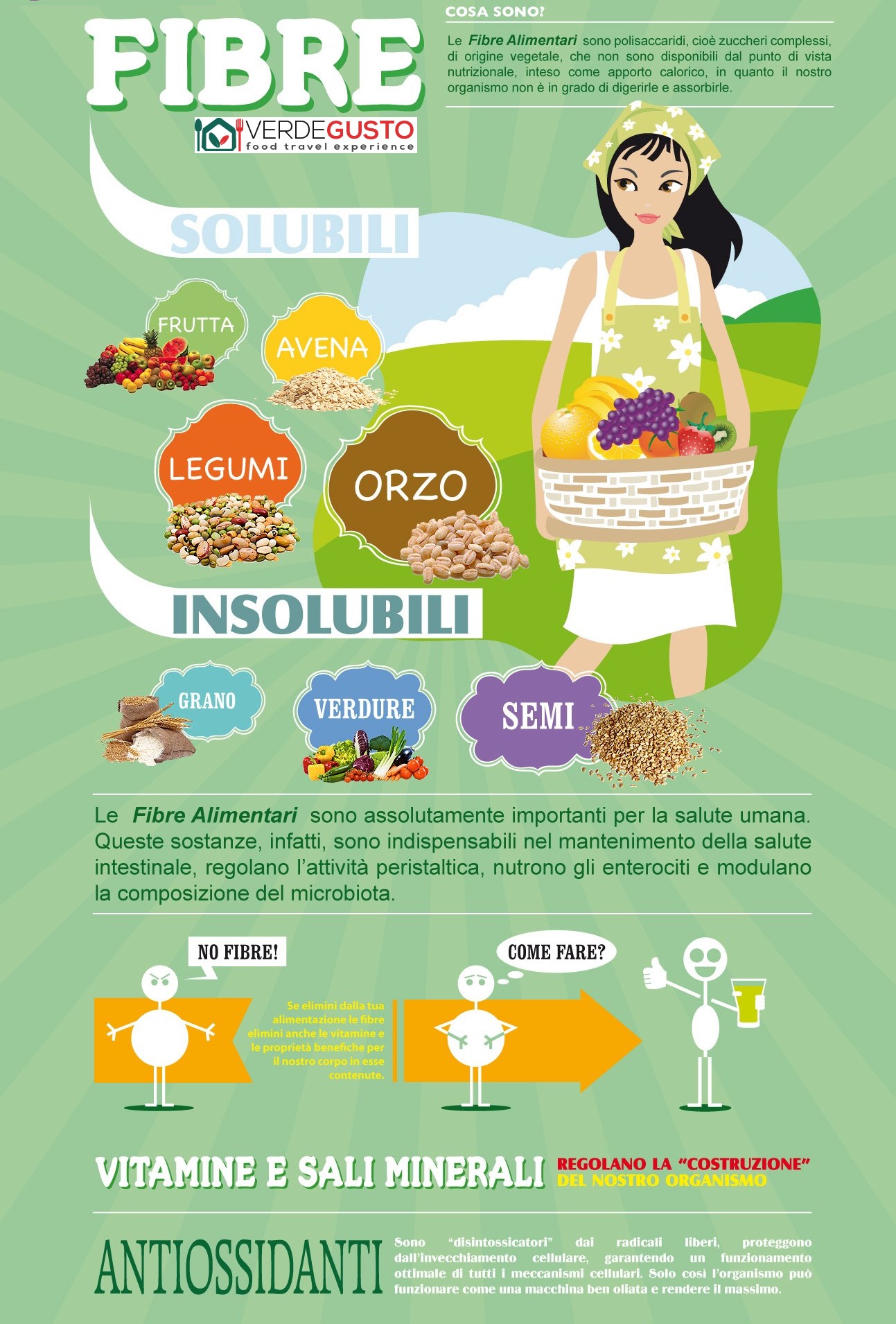
Dietary fibers are polysaccharides, in other words, complex sugars of plant origin that are not nutritionally available in terms of caloric contribution, since the human body is not able to digest or absorb them.
So, they are complex sugars (like starches) with a structure that does not allow normal digestion by amylase, the enzyme responsible for breaking down starches: this enzyme is normally present in saliva, produced mainly by the pancreas and therefore abundant in pancreatic juice, but is also produced throughout the digestive tract, in the liver, ovaries, etc.
Human amylase is, in fact, an alpha-amylase, meaning it can break alpha bonds, while, for example, ruminants possess a beta-amylase, capable of digesting cellulose (humans cannot) and even eating newspaper, as I once saw some “sacred cows” do in India, nourishing themselves this way.
This is why fiber from fruit and vegetables is called “indigestible”. Actually, this is only partially true, because when considering digestive physiology, we must not take into account only the “major systems.”
The intestinal mucosa produces a multitude of enzymes, disaccharidases, capable of splitting bonds between two different sugar molecules. A good example is stachyose, found in legumes, which, in the absence of the specific enzyme needed for its metabolism, is not digested and, as poor humans, we notice it by a sometimes rapid increase in flatulence.
Is the effect simply due to undigested sugar? How is that possible? In fact, any sugar that is not absorbed, by itself, retains water and increases intestinal motility (causing a tendency toward diarrhea).
Fibers work both by creating bulk and retaining water. Furthermore, bacteria help to digest fiber which produces healthy ingredients for the colon such as short-chain fatty acids. They can be useful for both diarrhea and constipation, depending on how much liquid is taken concurrently. Fibers can, in fact, effectively become a constipating agent if the ratio with the amount of liquids consumed is too low.

Why are dietary fibers important for the intestine?
These substances, in fact, are essential in maintaining intestinal health, contributing significantly to regulating peristaltic activity, adequately nourishing enterocytes, that is, the cells of the intestinal mucosa, and modulating the composition of the microbiota.
They are, in fact, partially or completely fermented by the bacterial flora present in the intestine, mainly in the colon. In particular, when taken alone, as a supplement, dietary fibers are fermented in greater proportion compared to when taken through foods. Dietary fiber includes parts of foods that our body cannot digest or absorb, and it is classified as soluble and insoluble fiber.
Dietary fibers: soluble and insoluble
Dietary fibers are divided into soluble and insoluble, this because of their chemical-physical properties, their size, and the ability, even partial, of the body to digest them, i.e., to enzymatically degrade them.
Soluble fiber is the form of fiber that dissolves in water. Examples of foods that contain soluble fiber include fruits, oats, legumes, and barley. This type of fiber dissolves in water to form a gel-like material. It can help lower blood cholesterol and glucose levels. Soluble fiber is found in oats, peas, beans, apples, citrus fruits, carrots, barley, and psyllium.
Insoluble fiber comes from the cell walls of plants and does not dissolve in water. Examples of foods that contain insoluble fiber are wheat, vegetables, and seeds. This type of fiber promotes the movement of material through the digestive system and increases stool bulk, so it may benefit those who struggle with constipation or irregular stools. Whole wheat flour, wheat bran, nuts, beans, and vegetables such as cauliflower, green beans, and potatoes are good sources of insoluble fiber.
Most plant foods, such as oat flour and beans, contain both soluble and insoluble fiber. However, the amount of each type varies in different plant foods. To receive the greatest health benefit, it is important to eat a wide variety of fiber-rich foods.
What are the benefits of a high-fiber diet?
A high-fiber diet has many advantages including:
- Normalization of bowel movements. Dietary fiber increases the weight and size of stools and softens them. Bulkier stools are moved more easily by intestinal peristaltic activity (the intestine is a pump that requires a certain volume of contents to function well) and are easier to pass, thus reducing the risk of constipation. When stools are too soft or watery, fibers can help solidify them because they absorb water and add bulk to the fecal residue.
- They help maintain intestinal health. A fiber-rich diet can decrease the risk of developing hemorrhoids and those pouch-like protrusions in the colon called diverticula. Some fibers are fermented in the colon. Researchers are investigating how this might play a role in preventing colon diseases, including cancer.
- They lower cholesterol levels. Soluble fibers found in beans, oats, flaxseeds, and oat bran may help reduce total blood cholesterol by lowering low-density lipoprotein, or “bad” cholesterol levels. Studies have also shown that fiber-rich foods may have other heart health benefits, reducing blood pressure and levels of micro-inflammation.
- They help control blood sugar (glucose) levels. In people with diabetes, fibers – especially soluble fibers – can slow sugar absorption and help improve blood glucose and glycated hemoglobin levels. A healthy diet including insoluble fibers can also reduce the risk of developing type 2 diabetes.
- They help achieve an ideal and healthy body weight. Fiber-rich foods tend to be much more satiating than low-fiber foods, so they are likely to lead to eating less and staying satisfied longer. Fiber-rich foods also tend to take longer to eat and are less “energy dense” meaning they have fewer calories for the same volume of food.
- Another benefit attributed to dietary fibers is the potential to prevent colorectal cancer.However, the evidence on this matter is sometimes conflicting, although from an epidemiological point of view, there seem to be more certainties than doubts.
How much fiber is necessary?
The Institute of Medicine (Institute of Medicine), recommends consuming the following daily amounts of fiber.
Recommended daily doses for adults
Man: 38 grams before 50 years, 30 grams dafter 50 years
Woman: 25 grams before 50 years, 21 grams dafter 50 years
It is clear that there is a difference between men and women and also relative to age, being about 30% lower for women and 20% lower after 50 years of age.
These data, mainly derived from epidemiological studies and not accounting for different somatic parameters, genetics, etc., could be debated, but they certainly represent a good starting point to reflect on and then “personalize.”
What are the best dietary fibers?
If you do not consume enough fiber daily, it may be necessary to increase your intake. Good choices include the following foods:
- whole grains
- fruit
- vegetables
- beans, peas, and other legumes
- nuts and seeds
Refined or processed foods, such as canned fruit and vegetables, fruit juices without pulp, white bread, pasta, and non-whole cereals, are lower in fiber. The refining process of wheat removes the outer coating (bran) from the wheat, which lowers its fiber content. Enriched foods are restored with some B vitamins and iron after industrial processing, but not fiber.
Whole foods, the best fiber supplements
Whole foods are better than fiber supplements. Fiber supplements do not provide the variety of fiber, vitamins, minerals, and other beneficial nutrients that a thoughtful diet ensures. Another way to get more fiber is to eat foods like cereals, muesli bars, yogurt, and ice cream with added fiber. The added fiber is usually labeled as “inulin” or “chicory root.”
Many people, however, complain of flatulence after eating foods with added fiber, yet it is still possible that a fiber supplement is needed if dietary changes are insufficient or if medical conditions such as constipation, diarrhea, or irritable bowel syndrome are present. It is therefore advisable to consult your doctor before taking fiber supplements.

8 reasons to increase fiber intake in your daily diet
Do you need ideas for adding more fiber to your meals and snacks? Here are 8 suggestions.
1. Start your day with a good dose of fiber
For breakfast, choose cereals high in fiber, at least 5 grams of fiber per serving. Opt for cereals with “whole grains”, “bran”, or “fiber” on the label. Or add a couple of tablespoons of unprocessed wheat bran to your favorite cereals.
2. Use only whole grain bread, pasta, and rice
Consume at least half of all grains as whole grains. Look for bread labeled as whole wheat or whole grain and containing at least 2 grams of dietary fiber per serving. Try using brown rice, wild rice, barley, and whole wheat pasta.
3. Make good use of baked goods
Replace white flour partially or better yet entirely with whole wheat flour when baking at home. Try adding cereal bran, whole wheat flour, and uncooked oat flour to make your cakes or cookies (to be consumed in moderation, of course).
4. Use more legumes
Beans, peas, and lentils are excellent sources of fiber. Add beans to your minestrone soup as well as to a green salad. Dishes based on tomato sauce, fresh vegetables, and legumes can be tasty and at the same time healthy.
5. Eat more fruits and vegetables
Fruits and vegetables, generally, are rich in fiber as well as vitamins and minerals. The goal should be five generous portions daily (always considering the kilogram we mentioned earlier).
6. Have snacks mid-morning and mid-afternoon
Fresh fruit, raw vegetables, and even a handful of nuts, almonds, or dried fruit are healthy, high-fiber snacks, and also an easy way to introduce some calories to complement those consumed at breakfast, lunch, and dinner (which should be moderated), providing the body with a continuous supply of energy, but also minerals and vitamins, well distributed throughout the day to ensure good metabolic functioning without causing unnecessary digestive “strain”.
7. Increase fiber in your diet gradually
It’s worth remembering that high-fiber foods are essential for maintaining good health and recovering an optimal state of balance, because they provide slowly absorbed carbohydrates and therefore require low insulin response (the real killer of our times), because they help ensure the intake of fundamental nutrients such as vitamins and minerals and nourish our microbiota. However, it is also true that adding too much fiber too quickly may increase intestinal gas and cause abdominal symptoms such as bloating, rumbling, and even cramps.
Over a few weeks allowing your gut bacteria, naturally present in your digestive tract, to adapt to the change, also using tools that allow you to utilize the valuable parts contained in vegetables such as juicers and centrifugal juicers. Learning that genetic diversity also expresses itself in individual fiber tolerance.
8. Learn to drink more water
Normally a full glass of 200 grams for every seven kilograms of body weight, increasing the amount in summer by at least 700-1000 grams and depending on the intensity of physical activity. Fibers work better when they absorb water, making stools bulkier and softer.

How to regulate fiber intake in your diet
Today we are aware of our microbiota, the immense population of bacteria that inhabit our guts (and skin) and we also know how these little creatures living inside and with us need to be nourished. Well, when fibers reach them they don’t care about the type of bond, they eat everything… too bad that in doing so they produce CO2 (carbon dioxide, a gas) and also methane (depending on how many good and bad bacteria we have).
This explains why many people experience discomfort when introducing fibers, to the point of giving up fruit and vegetables. Doing so is obviously a mistake because they give up vitamins, minerals, and antioxidants truly essential for our body to maintain (or acquire) an optimal state of health. Vitamins and minerals act as catalysts for our enzymatic processes, those processes that regulate the “building” of our body, its growth, its functioning, repair processes, and thus life.
Antioxidants act as detoxifiers from free radicals, protecting against cellular aging and consequently ensuring optimal functioning of all cellular mechanisms: this means that the organism, only in this way, can function like a well-oiled machine, smoothly and at its best.
For this reason, and respecting the genetic diversity that makes each of us unique, fruit and vegetables must absolutely be introduced, and it is important that they are seasonal, in certainly abundant amounts and not following sometimes improbable guidelines, while fibers must definitely be modulated and increased gradually. For this purpose, especially for those not used to consuming adequate amounts of vegetables, juicers, centrifugal juicers, and blenders are very useful (the fiber amounts increase depending on the appliance) because they help us introduce valuable nutrients (real nutrients and not empty calories), modulating fibers according to our needs and tolerance capacity.
Why are fibers so important for health?
Dietary fibers, which are mainly found in fruits, vegetables, whole grains, and legumes, are probably best known for their ability to prevent or relieve constipation. But foods containing fiber can provide other health benefits. As already highlighted by Burkitt, they help maintain a healthy weight and reduce the risk of diabetes and heart disease. Choosing tasty foods that provide fiber is not difficult. In the second part, which will follow, we will try to understand together how much dietary fiber you need, which foods contain it, and how to add them to your diet both as meals and snacks.
Prof. Alfredo Saggioro and Dr. Giulia Calogero.Founders and Coordinators of the Functional Medicine project www.medicinafunzionale.org